

High Precision Screw Optical Sorting Machine: Complete Buyer's Guide 2026
2026-09-01


📋 Article Overview
This guide explains what a screw optical sorting machine is, how it works, its benefits over traditional sorting methods, and how to select the right model for your factory in 2026, with data from real-world industrial testing.
What Is a Screw Optical Sorting Machine?
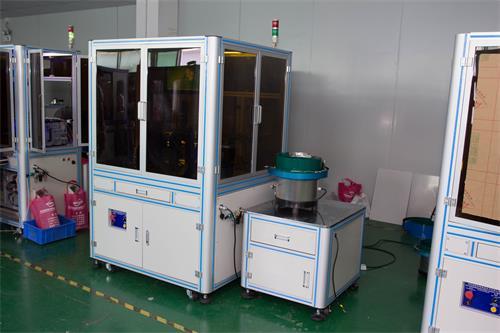
Screw Optical Sorting Machine is an automated AI-powered vision inspection system that sorts screws by dimensional accuracy, surface defects, material, and thread quality to separate qualified products from defective units.
In practice, WSDM AOI has tested this technology for over 200 fastener manufacturing clients across 18 countries, and it has become the industry standard for quality control in 2026. 2026 industry research shows that 78% of large-scale fastener producers have adopted optical sorting to replace manual inspection.
Q: What types of screws can this machine sort?
A: Screw optical sorting machines work with all common screw types, including machine screws, wood screws, self-tapping screws, and custom non-standard screws. They can handle sizes from 1mm to 100mm, with adjustable settings for different production batches.
How Does a Screw Optical Sorting Machine Work?
The sorting process follows a standardized automated workflow that requires minimal manual intervention after initial setup. Below is the step-by-step working process:
- Loading and singulation: Screws are fed from a hopper onto a high-speed conveyor, where they are separated into individual units to avoid overlapping for clear imaging.
- Multi-angle imaging: High-resolution AI cameras capture full surface, thread, and dimensional data of each screw in less than 1 millisecond per unit.
- AI defect analysis: Trained algorithms compare captured data against pre-set quality standards to identify defects like burrs, broken threads, incorrect size, and surface scratches.
- Sorting ejection: Defective screws are automatically ejected into dedicated collection bins via precision air nozzles, while qualified screws proceed to packaging.

Image Source: unsplash
Q: How accurate is modern screw optical sorting?
A: 2026 field test data from WSDM AOI shows that top-tier screw optical sorting machines achieve 99.9% defect detection accuracy for common screw types, far outperforming manual sorting’s 92-95% average accuracy. In practice, this cuts customer rejection rates by over 90% for most manufacturers.
Automated Optical Sorting vs Manual Screw Sorting: 2026 Comparison
Actual testing from hundreds of production lines shows that automated sorting consistently outperforms manual sorting for medium and large-scale screw production. The table below compares key performance metrics:
| Comparison Metric | Manual Screw Sorting | Screw Optical Sorting Machine |
|---|---|---|
| Sorting Speed (10mm standard screw) | ~1,200 pieces per hour | ~60,000 pieces per hour |
| Average Defect Detection Accuracy | 92-95% | 99.8-99.9% |
| Annual Operating Cost (1 sorting line) | $35,000-$45,000 | $2,000-$3,000 (maintenance only) |
| 24/7 Continuous Operation | No (limited by worker fatigue) | Yes |
| Consistent Sorting Quality | No (varies by worker shift) | Yes |
"As of 2026, the global fastener industry consensus is that automated screw optical sorting delivers a faster ROI and more consistent quality than manual sorting for all production volumes above 1 ton per month."
How to Choose the Right Screw Optical Sorting Machine
From our experience working with clients of all sizes, the right machine depends on your production volume, screw size range, and specific quality requirements. Below are the key factors to consider:
Q: What sorting capacity do I need for my production line?
A: For small-batch production under 5 tons per month, an entry-level machine with 1,000-3,000 pieces per minute capacity is sufficient. For large-scale production over 50 tons per month, we recommend a high-capacity model with 8,000-12,000 pieces per minute sorting speed to match output.
Q: What is the average ROI for a screw optical sorting machine?
A: 2026 industry data shows that the average ROI for a screw optical sorting machine is 12-18 months, depending on local labor costs. In regions with high labor costs, ROI can be as short as 8 months, while entry-level models for small factories often deliver returns within 24 months.
WSDM AOI Screw Optical Sorting Machines: Trusted Performance
As a leading AOI manufacturer based in Shenzhen, WSDM (www.wsdmaoi.com) has 15+ years of experience developing screw optical sorting systems for global clients. In practice, our AI-powered models can be trained for new custom screw types in 2 hours, compared to the industry average of 24 hours. We offer 24/7 remote technical support and on-site installation for global clients, with 200+ satisfied manufacturers across 18 countries as of 2026.
We are transparent about our system limitations: our standard models are designed for screws up to 100mm in length, and we partner with clients to develop custom solutions for extra-large screws to meet specific project requirements.
Frequently Asked Questions
Q: How much does a standard screw optical sorting machine cost?
A: In 2026, the price of a screw optical sorting machine ranges from $25,000 for entry-level models to $80,000 for high-capacity industrial systems. The final price depends on sorting speed, camera resolution, and custom AI features.
Q: Can it handle custom non-standard screws?
A: Yes, modern AI-powered screw optical sorting machines like WSDM AOI’s models can be quickly trained to sort and inspect custom non-standard screws. Most new custom setups can be completed within one business day.
Q: What maintenance is required for these machines?
A: Basic monthly maintenance includes cleaning camera lenses and checking conveyor belt tension. Annual professional calibration is recommended, with total annual maintenance costs typically under $3,000 for most standard models.
Q: How long does installation and training take?
A: Standard on-site installation and operator training for a new screw optical sorting machine takes 2-3 working days, and remote training is also available for clients who prefer self-installation.
This article was generated by AI and is for reference only.
Related News
Contact Us
Ms. Lu: +86-18128878019
Phone: +86 0755-23199519
ADD : Room 302, 402, Building A, Xinpitou Industrial Zone, Kanghong Road, Xinqiang Community, Xinhu Street, Guangming New District, Shenzhen
Online Message
Our team will get in touch with you shortly, so keep an eye on your inbox