

Revolutionizing Optical Testing: Why Choose a CCD Visual Inspection Machine?
2025-12-04


Revolutionizing Optical Testing: Why Choose a CCD Visual Inspection Machine?
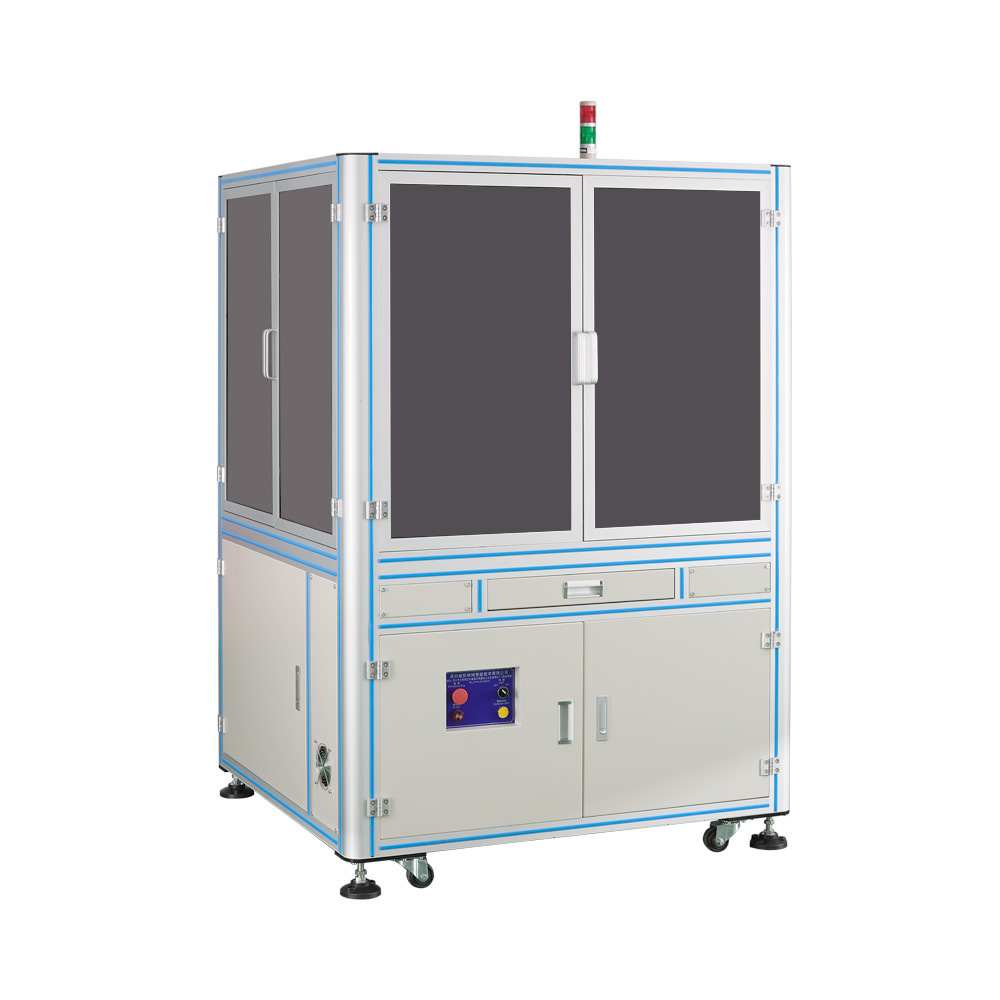
In today’s fast-paced industrial landscape, maintaining high standards in quality control and assurance is paramount. Optical testing has emerged as an essential component of this process, ensuring that products meet stringent specifications and customer expectations. **CCD (Charge-Coupled Device) visual inspection machines** have become a game-changer in this field, providing unmatched precision and efficiency. In this article, we delve into the advantages of CCD visual inspection machines, their operational principles, applications, and why they are the preferred choice in optical testing.
Table of Contents
- 1. Introduction to CCD Visual Inspection Machines
- 2. Understanding the Technology Behind CCD
- 3. Key Advantages of CCD Visual Inspection Machines
- 4. Applications in Various Industries
- 5. Comparison with Traditional Inspection Methods
- 6. Choosing the Right CCD Visual Inspection Machine
- 7. Future Trends in Optical Testing Technology
- 8. Frequently Asked Questions
- 9. Conclusion
1. Introduction to CCD Visual Inspection Machines
**CCD visual inspection machines** utilize advanced imaging technology to conduct thorough visual inspections of optical components and systems. They play a vital role in industries such as electronics, manufacturing, and automotive, where visual quality is crucial. By leveraging high-resolution imaging and sophisticated processing algorithms, these machines can detect defects that might be imperceptible to the human eye, significantly improving quality assurance processes.
2. Understanding the Technology Behind CCD
The CCD sensor technology was developed in the 1960s, and it has since evolved to become a cornerstone of modern imaging systems. At its core, a CCD sensor consists of an array of capacitors that convert light into electrical signals. The fundamental process involves:
- Image Capture: When light hits the CCD sensor, it generates an electrical charge proportional to the intensity of the light.
- Charge Transfer: The charges are transferred across the sensor and read out, creating a digital representation of the image captured.
- Image Processing: Advanced algorithms process the image to highlight defects, verify dimensions, and ensure the integrity of the optical components.
3. Key Advantages of CCD Visual Inspection Machines
Choosing **CCD visual inspection machines** for optical tests brings numerous advantages:
3.1 Enhanced Precision and Accuracy
With their high-resolution imaging capabilities, CCD machines provide unparalleled precision. They can detect minute defects and irregularities, ensuring that each product meets required standards.
3.2 Increased Speed and Efficiency
CCD visual inspection machines operate at remarkable speeds. Unlike human inspectors, these machines can process images and data in real-time, significantly reducing inspection times and increasing throughput.
3.3 Consistent Quality Control
Automating the inspection process leads to consistent results, eliminating the variability associated with manual inspections. This consistency is crucial in maintaining quality across production runs.
3.4 Versatility and Adaptability
CCD technology can be adapted for a wide range of applications, from inspecting lenses and prisms to evaluating electronic components. This versatility makes them suitable for various industries and product types.
3.5 Reduced Labor Costs
By automating visual inspections, companies can minimize labor costs and reallocate personnel to more strategic roles within the organization. This not only enhances productivity but also allows for better resource management.
4. Applications in Various Industries
CCD visual inspection machines find applications in diverse sectors:
4.1 Electronics Manufacturing
In the electronics sector, these machines are used to inspect circuit boards, ensuring that solder joints and components are placed correctly.
4.2 Optical Component Production
Manufacturers of optical lenses, mirrors, and filters utilize CCD inspection systems to scrutinize surface quality and optical performance.
4.3 Automotive Industry
In the automotive sector, CCD machines are employed to inspect parts such as headlights and sensors, ensuring they meet safety standards.
4.4 Aerospace
Companies in the aerospace industry rely on CCD inspection machines to ensure the reliability and safety of critical components, from navigation systems to structural elements.
5. Comparison with Traditional Inspection Methods
While traditional inspection methods, such as manual visual checks, have their place, they often fall short compared to CCD technology:
5.1 Accuracy
Manual inspections are inherently subjective, whereas CCD systems provide objective, quantifiable results.
5.2 Speed
CCD machines process images much faster than human inspectors, allowing for a higher volume of inspections in a shorter time frame.
5.3 Cost-effectiveness
Though the initial investment in CCD systems may be higher, the long-term savings through reduced labor costs and improved quality control often justify the expense.
6. Choosing the Right CCD Visual Inspection Machine
Selecting the appropriate CCD visual inspection machine involves considering several factors:
6.1 Resolution Requirements
Determine the resolution needed based on the smallest defects you need to detect. Higher resolutions will yield more detailed images but may also come with higher costs.
6.2 Speed and Throughput
Consider the required inspection speed and how it aligns with your production rates. Machines with faster processing times can enhance overall efficiency.
6.3 Software Compatibility
Ensure the inspection machine's software integrates seamlessly with your existing quality control systems. This integration is vital for streamlining operations.
7. Future Trends in Optical Testing Technology
The field of optical testing is evolving rapidly, with several trends on the horizon:
7.1 Integration of AI and Machine Learning
The incorporation of AI and machine learning into CCD systems is set to revolutionize the inspection process by enabling predictive maintenance and intelligent defect detection.
7.2 Miniaturization of Technology
As technology advances, we can expect smaller, more efficient CCD visual inspection machines that can be easily integrated into existing production lines.
7.3 Enhanced User Interfaces
Future systems will likely feature more intuitive user interfaces, making them easier to operate and requiring less specialized training for personnel.
8. Frequently Asked Questions
8.1 What is a CCD visual inspection machine?
A CCD visual inspection machine is an advanced imaging system that uses CCD technology to conduct high-precision inspections of optical components.
8.2 How does CCD technology improve inspection accuracy?
CCD technology provides high-resolution images that allow for the detection of minute defects that may be missed during manual inspections.
8.3 In which industries are CCD visual inspection machines commonly used?
These machines are widely used in electronics, automotive, aerospace, and optical component manufacturing industries.
8.4 What are the main benefits of using CCD visual inspection machines?
Key benefits include enhanced precision, increased speed, consistent quality control, versatility, and reduced labor costs.
8.5 How do I choose the right CCD visual inspection machine for my needs?
Consider factors like resolution requirements, inspection speed, and software compatibility when selecting a CCD visual inspection machine.
9. Conclusion
**CCD visual inspection machines** are undeniably at the forefront of optical testing technology. Their remarkable precision, speed, and versatility make them an essential tool for various industries seeking to uphold stringent quality standards. As technology continues to evolve, the integration of advanced features such as AI will further enhance their capabilities, ensuring that they remain indispensable in the quest for excellence in optical testing. By investing in CCD visual inspection machines, organizations position themselves to meet the challenges of today’s marketplace while preparing for the future of manufacturing and quality control.
Contact Us
Ms. Lu: +86-18128878019
Phone: +86 0755-23199519
ADD : Room 302, 402, Building A, Xinpitou Industrial Zone, Kanghong Road, Xinqiang Community, Xinhu Street, Guangming New District, Shenzhen
Online Message
Our team will get in touch with you shortly, so keep an eye on your inbox




